Home / Customization Services / Screen Printing
Bold, Durable Screen Prints That Hold Up Wash After Wash
Screen printing is still the benchmark for crisp, opaque graphics on garments in volume. We run plastisol and water-based inks on manual and automatic presses, match your Pantone references, and test-print before we commit your run. Orders start at 50 pieces for most styles, with free mockup support.
- Plastisol and water-based inks
- Pantone spot colour matching
- Up to 8 colours per print
- Pre-production samples included
How screen printing works at our factory
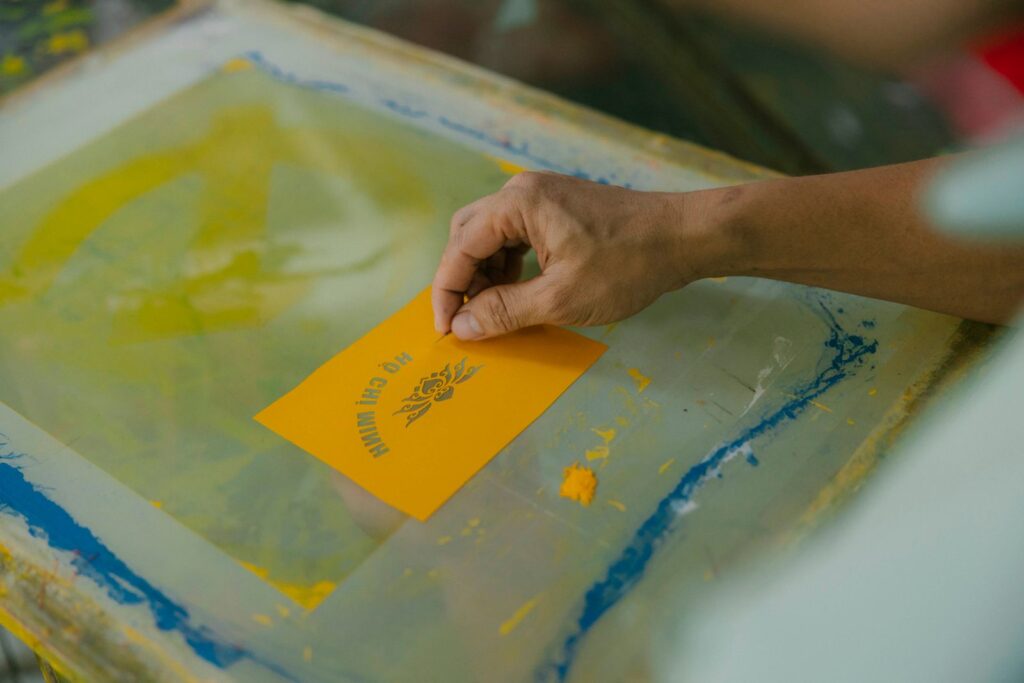
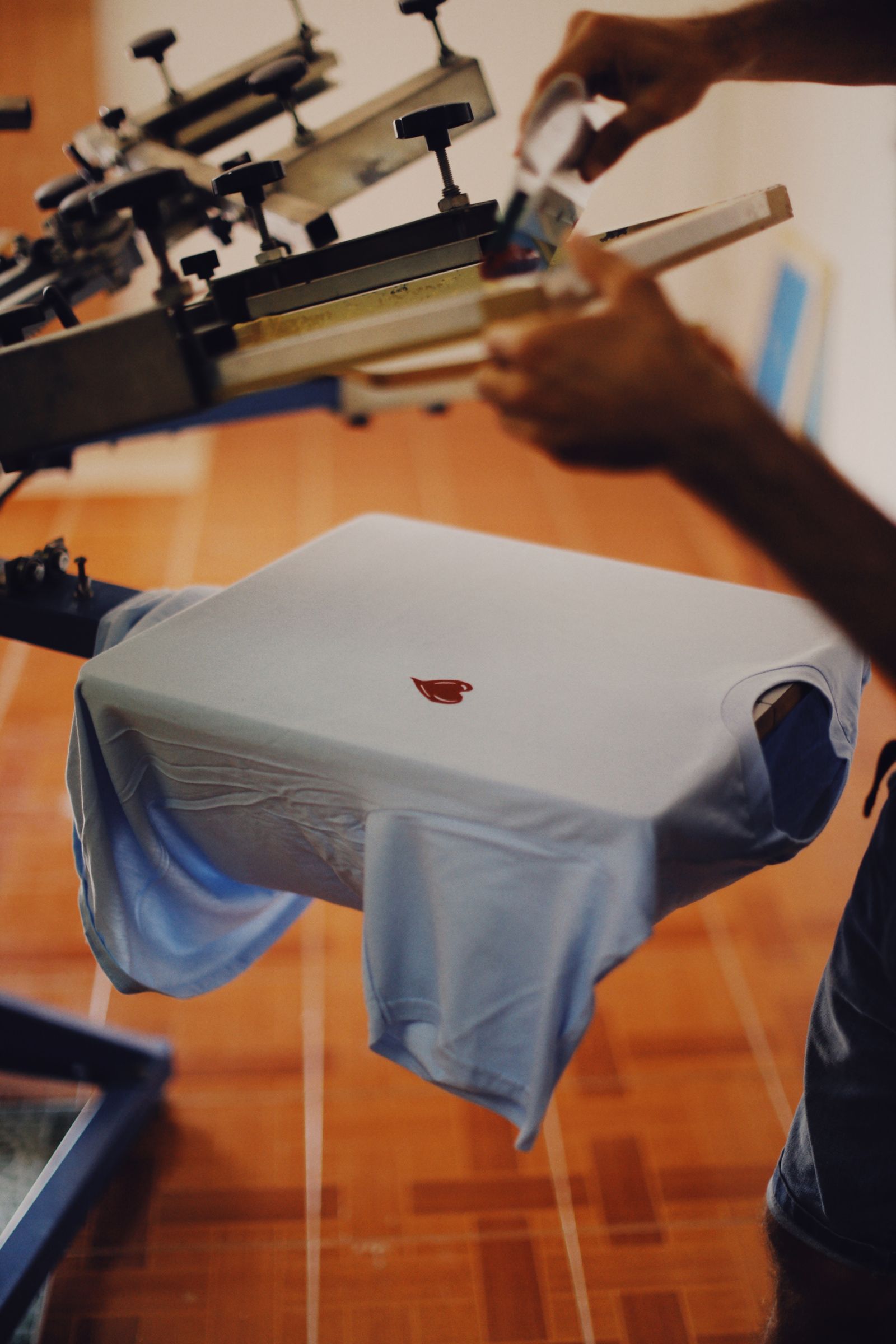
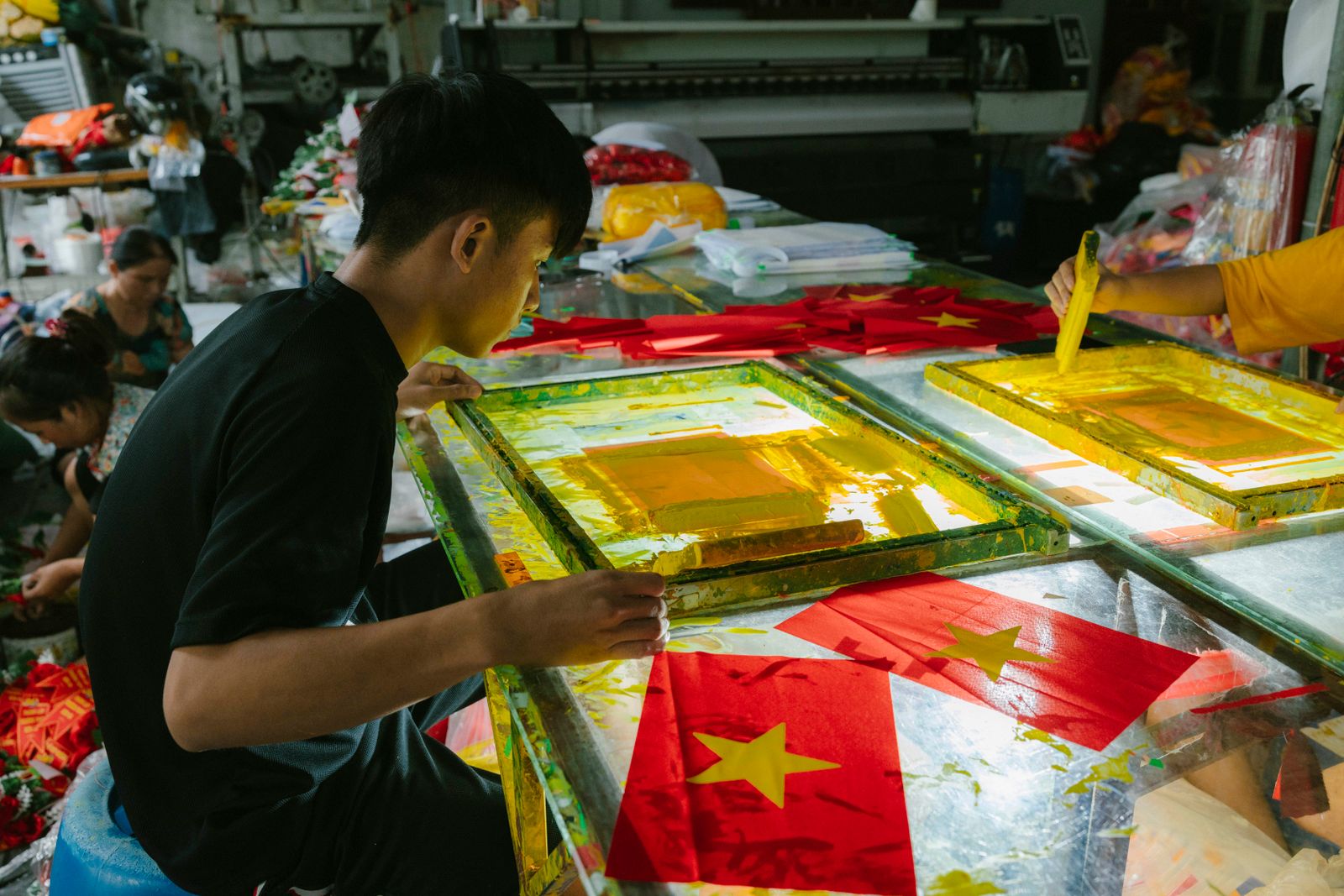
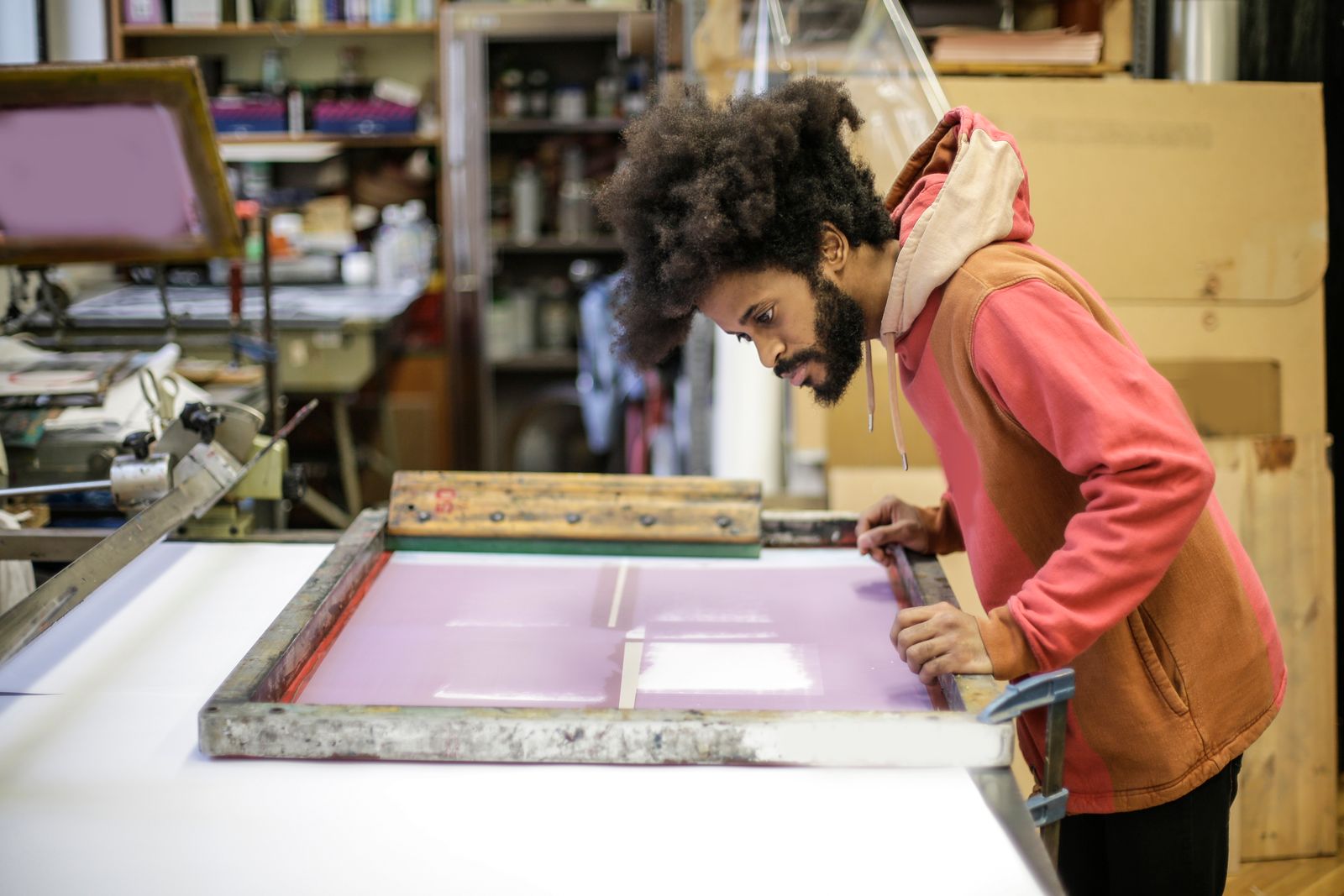
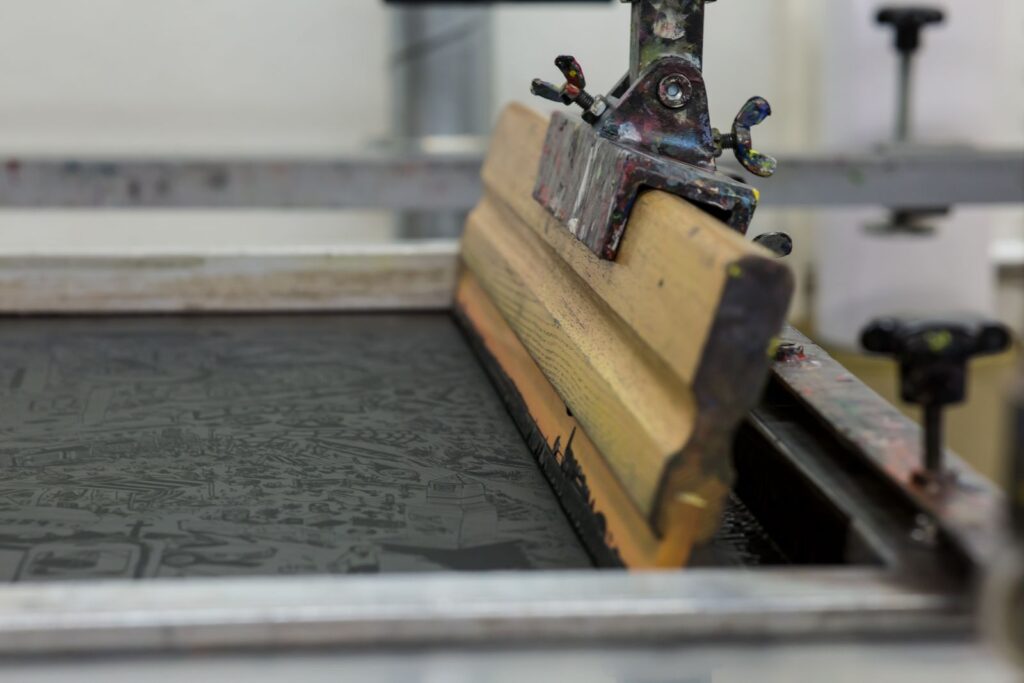
Screen printing pushes ink through a fine mesh stencil, one colour per screen, directly onto the garment. Each colour in your artwork needs its own screen, which is why the process rewards simple, bold graphics and larger quantities. Once the screens are made, every additional print costs very little in time, so unit economics improve fast as volume rises.
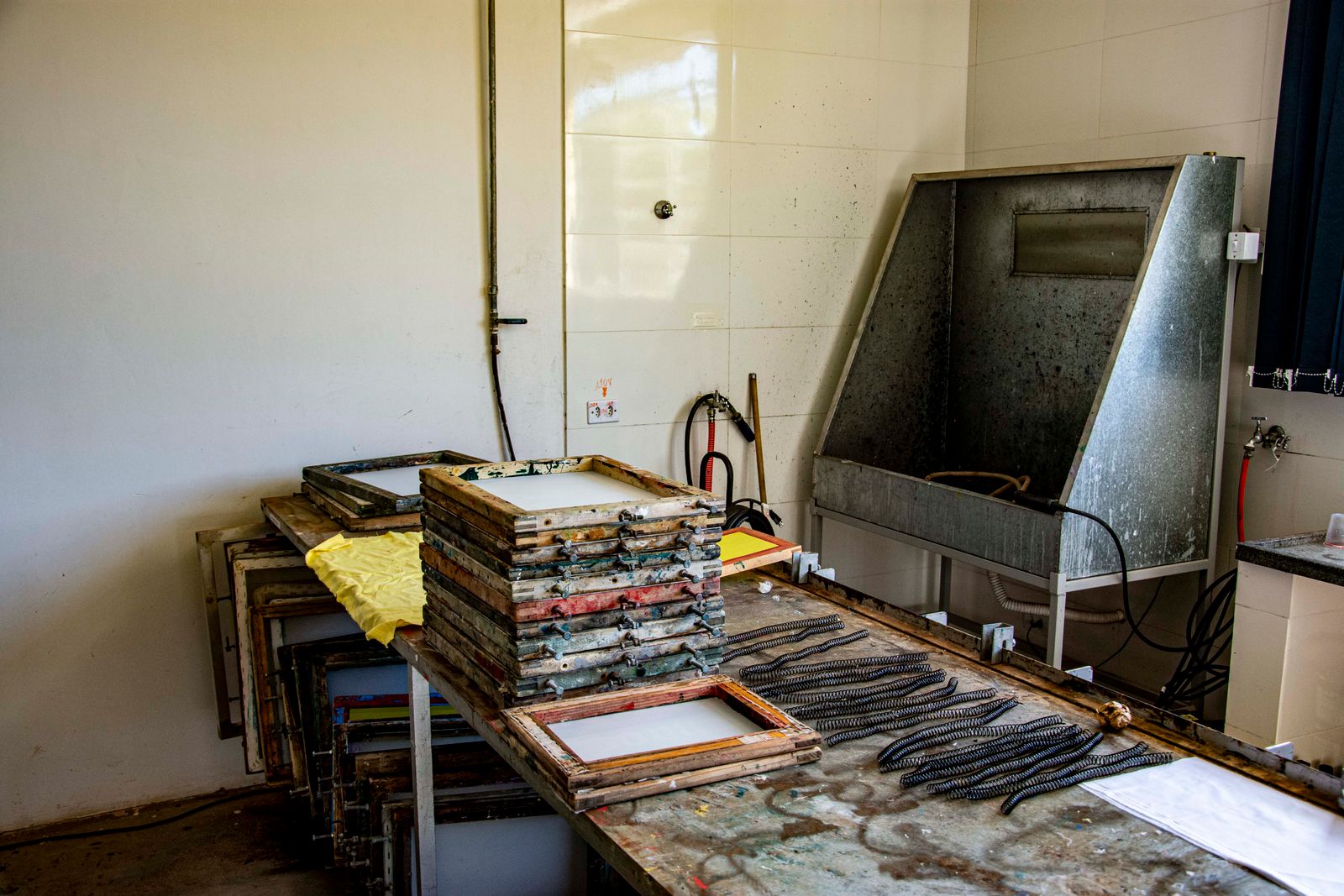
We separate your artwork into colour layers, burn each layer onto an emulsion-coated screen, and register the screens on the press so every colour lands exactly where it should. Dark garments usually get a white underbase first, a thin flash-cured layer that stops the fabric colour from dulling the inks printed on top.
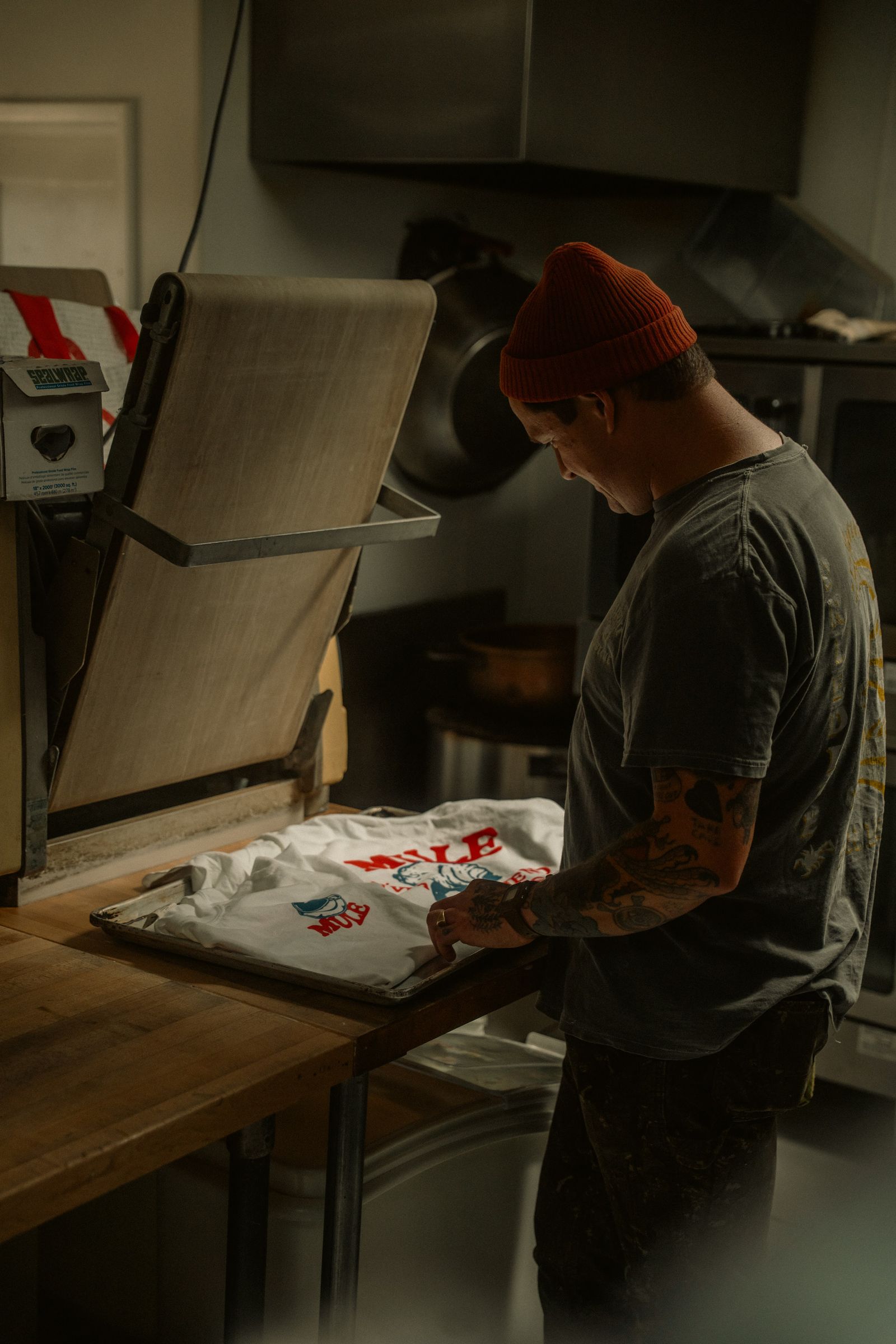
After printing, the garment passes through a conveyor dryer. Plastisol must reach about 160 degrees Celsius (320 F) throughout the ink film to cure properly, and we check this with a temperature probe rather than guessing. Water-based ink cures by evaporating its water content, then heat-setting. Either way, an under-cured print will crack or wash out, so curing is where we spend our attention.
Where screen printing performs best
Branded drops of 50 or more
Once screens are set, each extra piece is fast to print. That makes screen printing the sensible choice for streetwear collections, merch runs and staff uniforms where quantity is steady and the design repeats across sizes.
Solid, vivid colour blocks
Screen printing lays down thick, opaque ink that DTG and DTF struggle to match on dark fabric. Flat logos, slogans and large chest graphics look saturated and clean, with sharp edges at small type sizes.
Soft-hand vintage looks
Water-based and discharge inks soak into the fibre rather than sitting on top. On cotton tees and fleece this produces a breathable, worn-in finish that fashion labels often request for premium blanks.
Specialty finishes
The screen process supports metallic, glitter, high-density and reflective inks, plus puff additives. If you want a texture or effect on a single colour, screens give us more finish options than most digital methods.
What you get with our screen printing
Pantone colour matching
We mix inks to your Pantone references and print a draw-down on the actual fabric before the run, so you approve the real colour, not a swatch on paper.
Underbase on dark garments
Black, navy and heather fabrics get a flash-cured white underbase so reds, yellows and greens stay vivid instead of turning muddy over the garment colour.
Probe-checked curing
We verify ink temperature through the full film thickness on the conveyor dryer. Properly cured prints survive repeated hot washes without cracking or peeling.
Tight multi-colour registration
Our presses use micro-registration so each screen lines up. Fine outlines, halftone shading and overlapping colours print cleanly across every size in the run.
Screen printing options
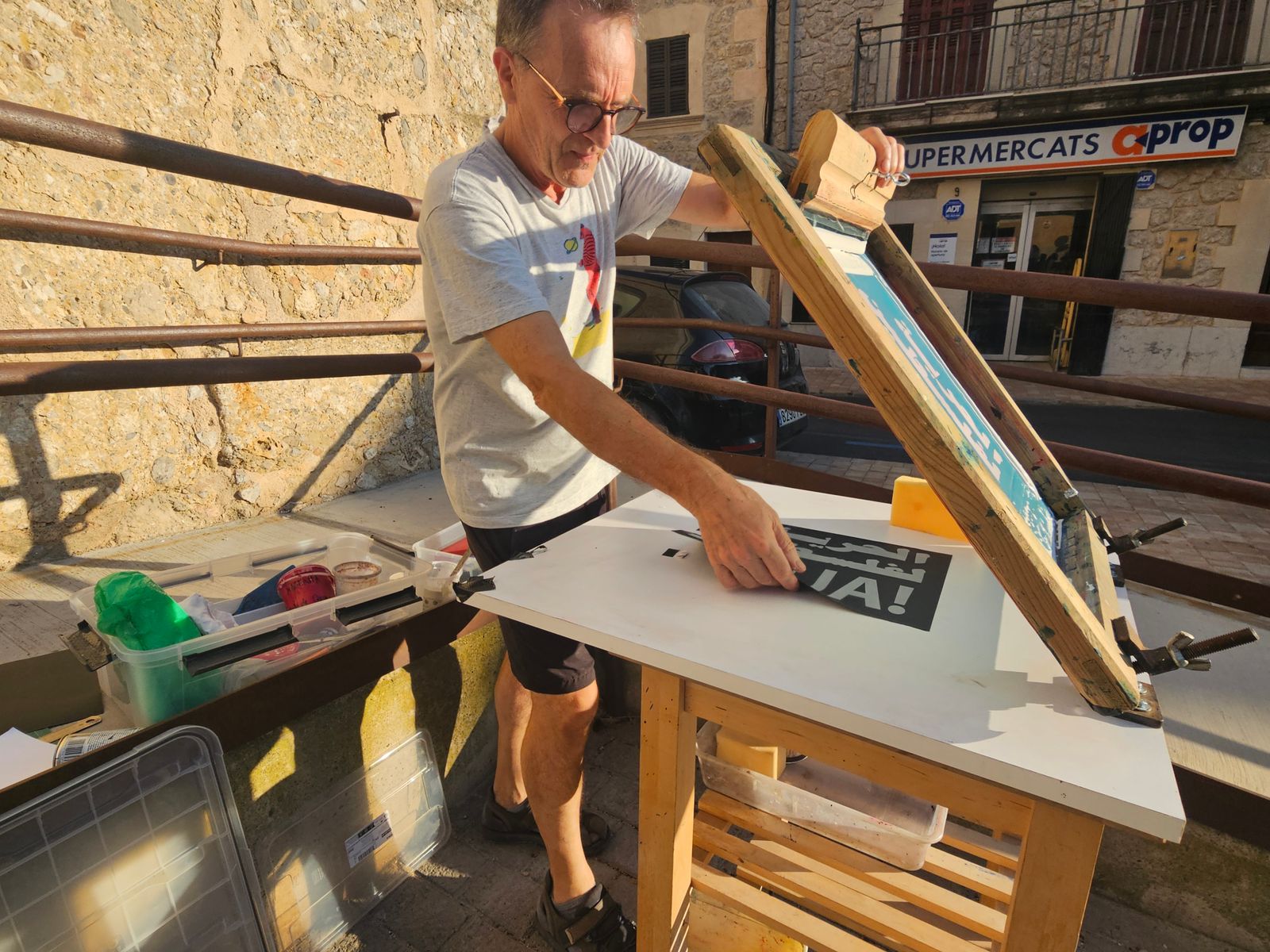
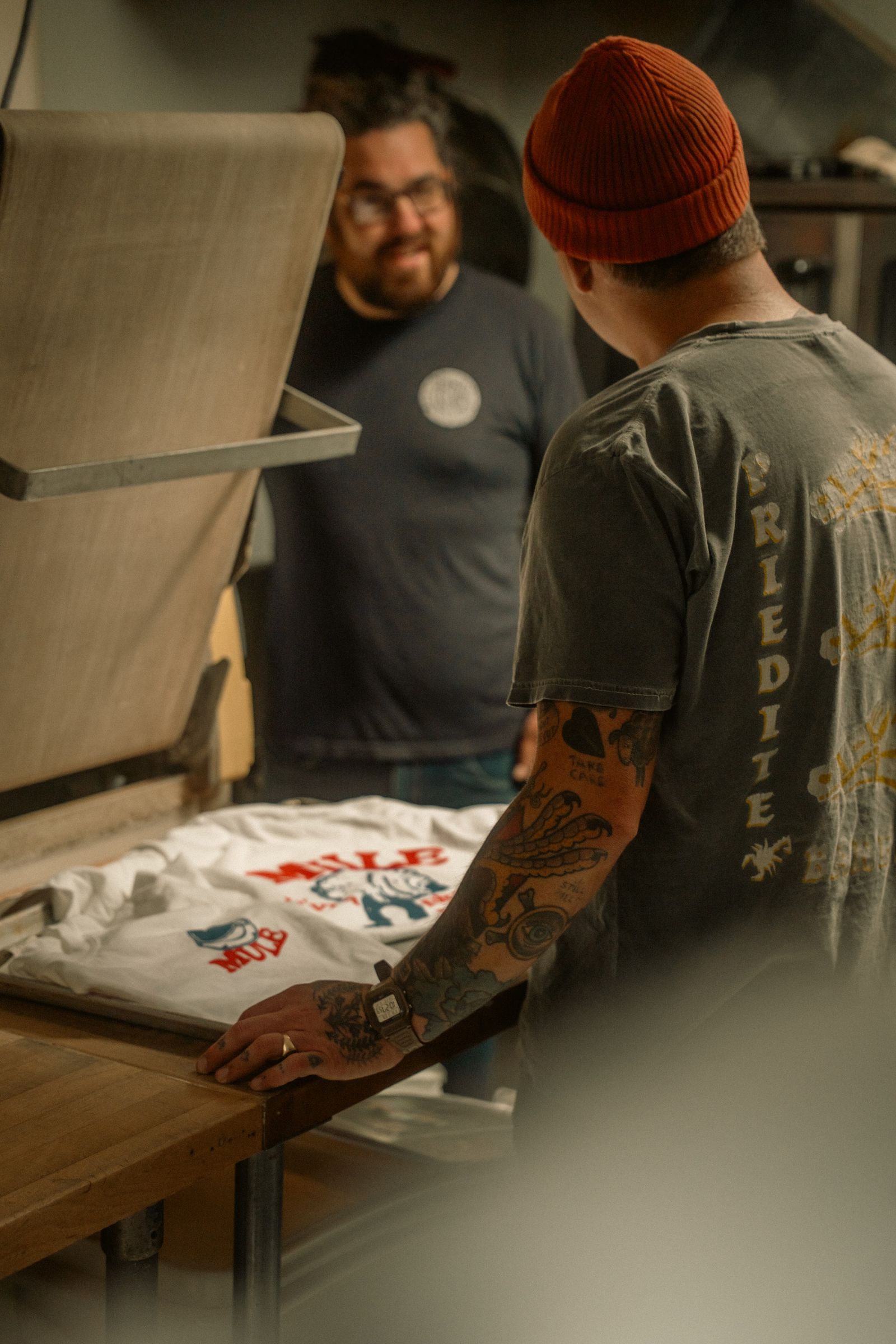
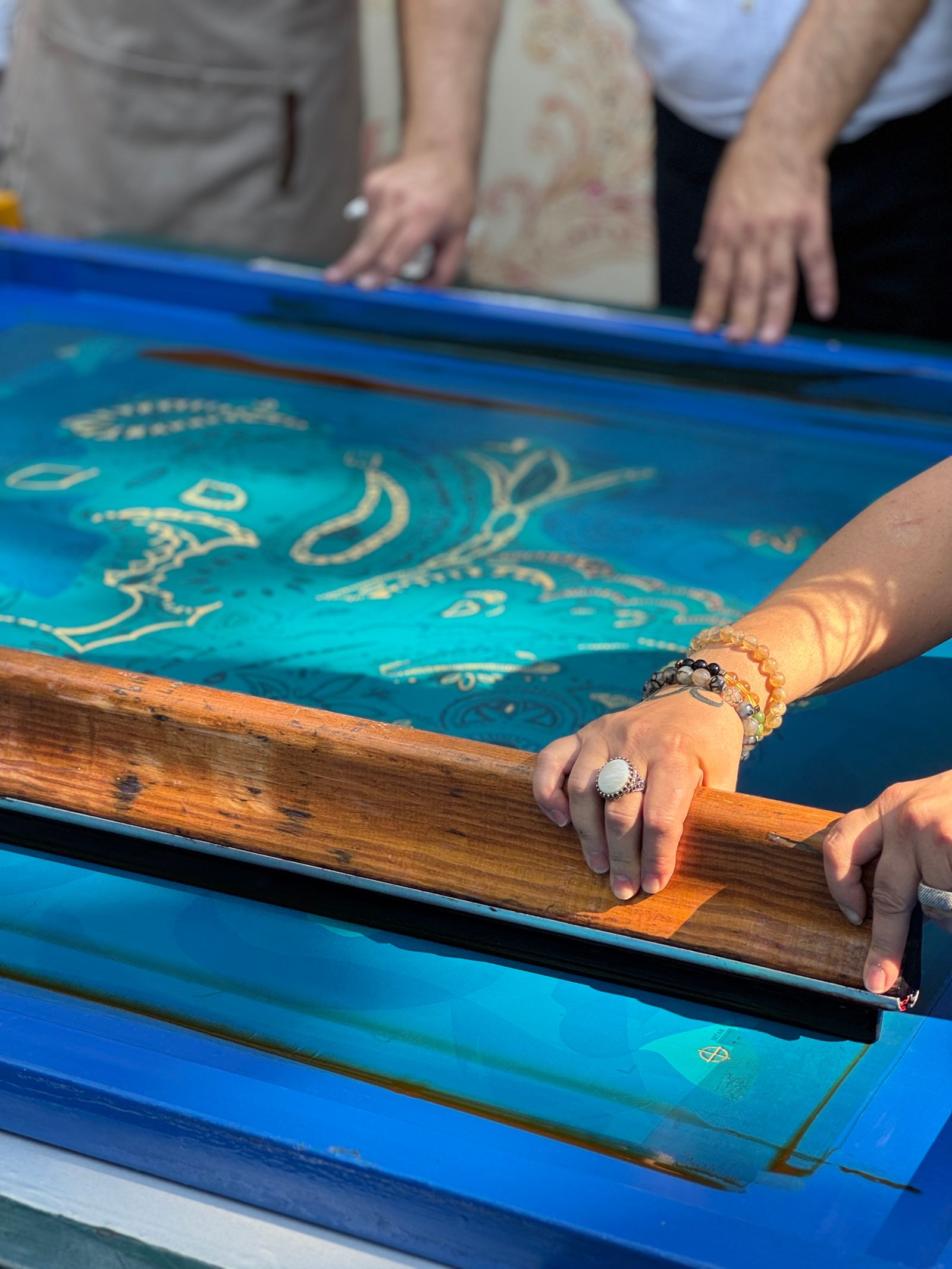
Send your artwork, garment type and quantity. We will confirm colour count, ink type and a quote, and prepare a mockup before any screens are made.
Plastisol ink
The industry workhorse. Plastisol sits on the surface, prints opaque on any colour, and stays stable in the screen. It gives a slightly raised, rubbery hand and the most reliable colour accuracy and durability.
Water-based ink
Soaks into the fibre for a soft, breathable feel with no plastic layer. Best on light and mid-tone cotton. It needs careful curing and works less well for opaque white on very dark fabric.
Discharge and specialty inks
Discharge removes dye from dark cotton and replaces it with colour, giving a soft, flat print. We also run metallic, glitter, reflective and high-density inks for accents and statement graphics.
Placement and sizing
Chest, back, sleeves, hem, neck and all-over layouts are available. Standard print areas run to roughly 30 by 40 cm, and we can print oversized or across seams where the garment allows.
Screen printing versus the alternatives
Choose screen printing when your design uses six colours or fewer, your run is 50 pieces or more, and you want the most durable, opaque result on cotton or blends. It is usually the lowest cost per piece at scale, and it handles Pantone-specific brand colours better than any digital process.
Choose DTG or DTF when you have photographic artwork, gradients or many colours, or when you need very small runs. Choose embroidery for structured caps and workwear where a stitched look signals quality. If you are unsure, send us the artwork and we will recommend the method that suits the design and the budget.
Who orders this
Screen printing suits any buyer who needs repeatable, hard-wearing graphics in volume. Brands, clubs and companies choose it because the artwork stays consistent from the first piece to the last, and the finished garment keeps its look through a long working life.
- Streetwear labels releasing seasonal graphic tees and hoodies
- School and university merchandise in larger sizes runs
- Corporate buyers ordering staff and event uniforms
- Sports clubs printing training wear and supporter shirts
- Print shops outsourcing overflow orders to a trade partner
Care & durability
Turn garments inside out, wash at 30 to 40 degrees Celsius, and avoid fabric softener, which can attack the ink bond over time. Tumble on low or hang dry, and never iron directly on a print.
A correctly cured plastisol print typically outlasts the garment itself. Water-based prints fade slightly sooner by design, which is part of the vintage appeal. We include care label guidance with every bulk order.
Screen printing questions
Straight answers to the questions buyers ask us most. Anything missing? Send an inquiry and we will reply within one business day.
How many colours can you print in one design?
We commonly print up to eight colours on automatic presses. Every colour needs its own screen, so cost rises with colour count. If your artwork has more than six colours or gradients, we may suggest simulated process separations or DTF instead.
What is the minimum order for screen printing?
Most styles start at 50 pieces, mixed sizes allowed within a single design. For fewer than 50 pieces, we recommend DTG or DTF, which carry no screen setup. Tell us your quantity and we will quote the most economical route.
Plastisol or water-based: which should I choose?
Plastisol suits dark garments, bright colours and maximum durability. Water-based suits light cotton where you want a soft, breathable print. We can print a small test of both on your chosen blank so you feel the difference before deciding.
What file format do you need for artwork?
Vector files such as AI, EPS or PDF give the cleanest separations. High resolution PNG at 300 dpi or more also works for simple graphics. Our design team will clean up or redraw low quality files at no charge.
Can you match my brand's exact colour?
Yes. Send a Pantone reference and we will mix the ink and print a draw-down on your fabric. Remember that ink looks different on different garment colours, which is why we confirm on the actual blank rather than relying on screen previews.
Request a quote for Screen Printing
Send your artwork, garment type and quantity. We will confirm colour count, ink type and a quote, and prepare a mockup before any screens are made.
- Reply within one business day
- Free mockup with every quote
- Pre-production sample before bulk
- Low minimums from 50 pieces
Prefer to talk? WhatsApp or call +92 329 8034691
When you click send, WhatsApp opens with your details pre-filled so you can send them straight to our team.
Ready to print your next run?
Share your design and target quantity with our team. You will get a clear quote, a free mockup and a pre-production sample before we start the full order.