Home / Customization Services / Sublimation Printing
Edge-to-Edge Colour That Becomes Part of the Fabric
Sublimation turns solid dye into gas that bonds with polyester fibres, so the colour is inside the fabric, not on it. The result is a print you cannot feel, that does not crack or peel, and that can run across an entire garment. It is the standard method for team jerseys, activewear and all-over designs.
- All-over seamless printing
- Prints that never crack or peel
- No hand feel, fully breathable
- Best on white or light polyester
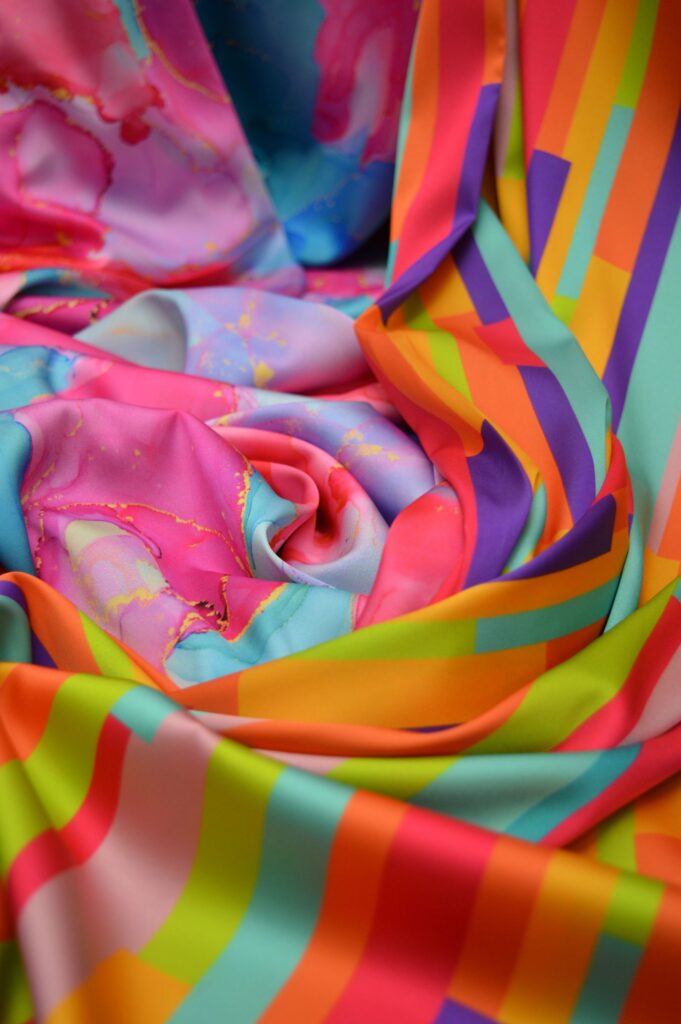
Why sublimation looks and feels different
The process starts by printing your design in reverse onto transfer paper with sublimation inks. The paper meets the fabric under heat and pressure, typically around 190 to 205 degrees Celsius (375 to 400 F) for 45 to 60 seconds. At that temperature the dye turns directly from solid to gas, enters the swollen polyester fibres, and locks in as they cool.
This chemistry sets the rules. Sublimation dyes only bond with polyester or polymer-coated surfaces, so the garment should contain a high polyester content, ideally 100 percent. Fabric must also be white or very light, because sublimation ink is translucent and cannot print white. Cotton does not accept the dye and produces faded, short-lived colour.
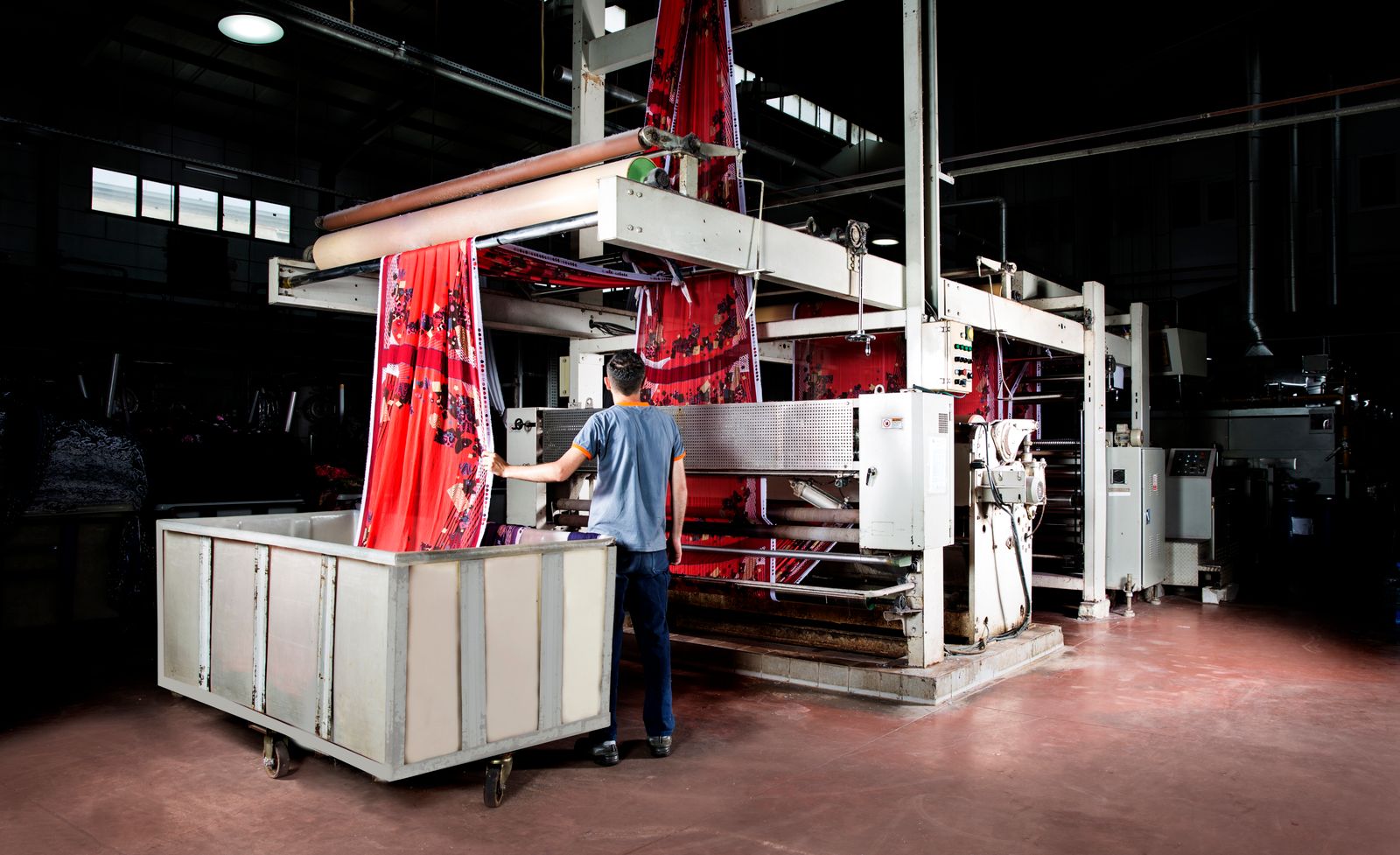
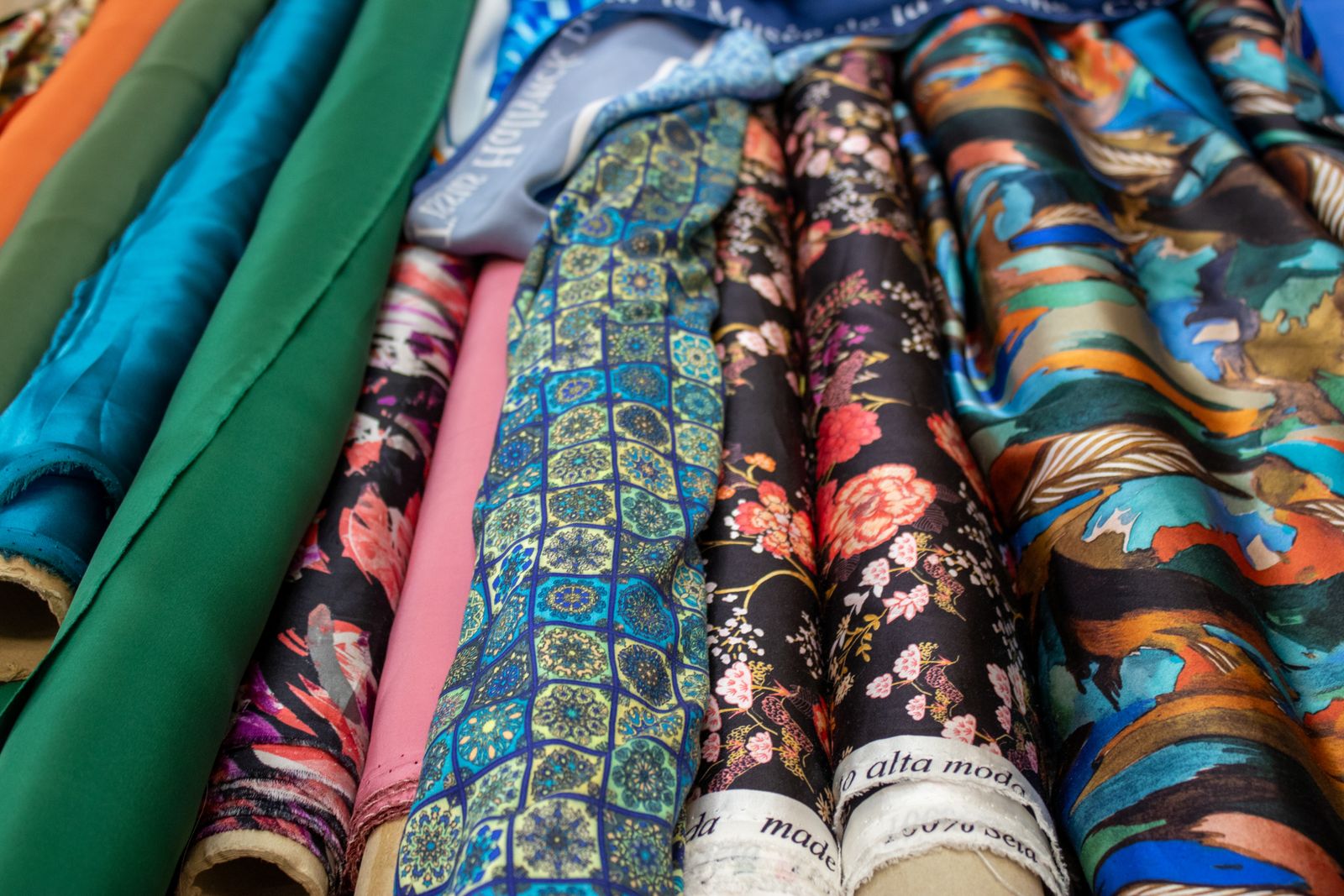
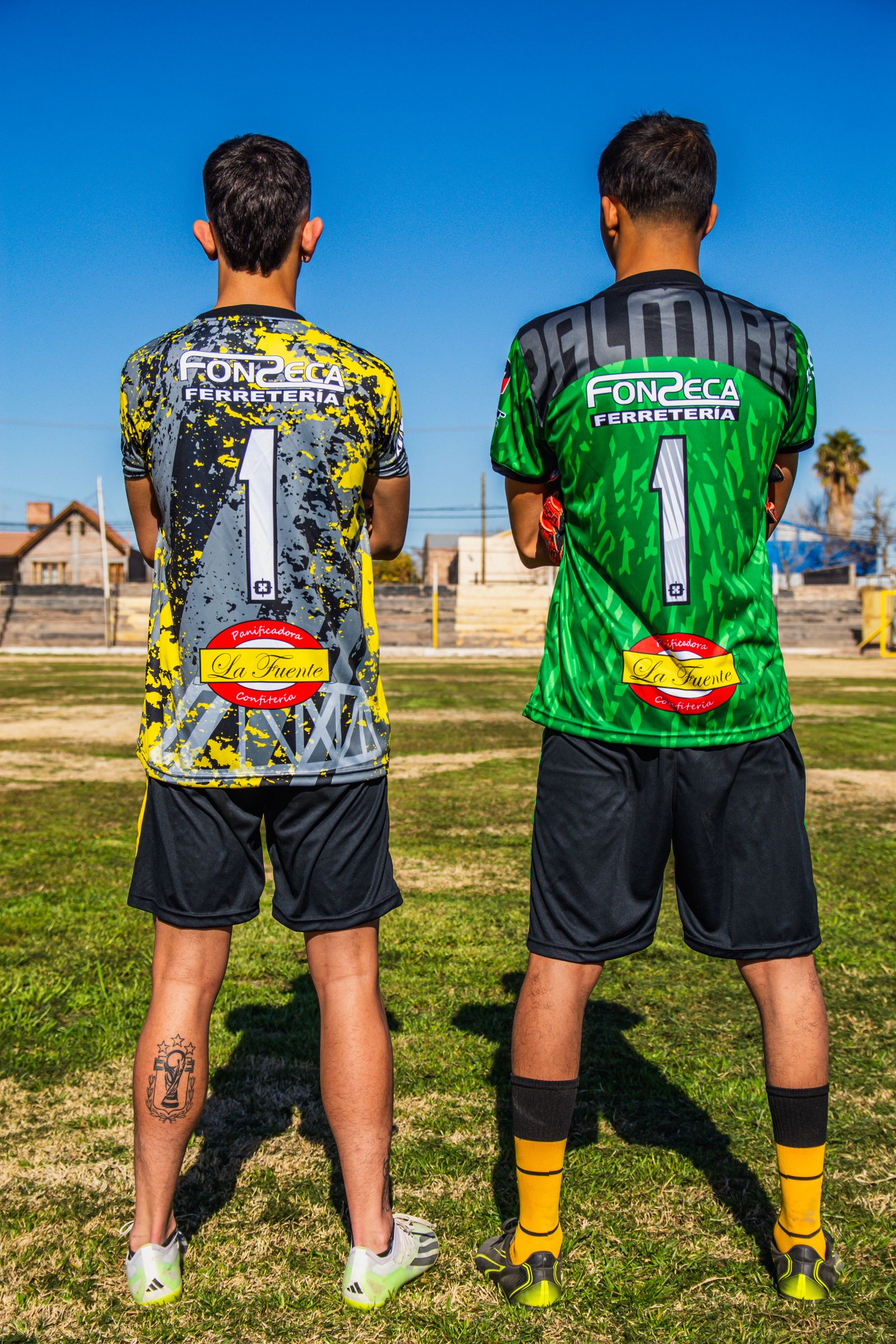
For all-over garments, we often print the paper roll first and cut the fabric panels afterwards, then sew. This lets artwork flow across seams and sleeves with no white gaps at the edges. It also allows full-body patterns, gradients and photographic graphics that no other method can deliver at similar durability.
When sublimation is the answer
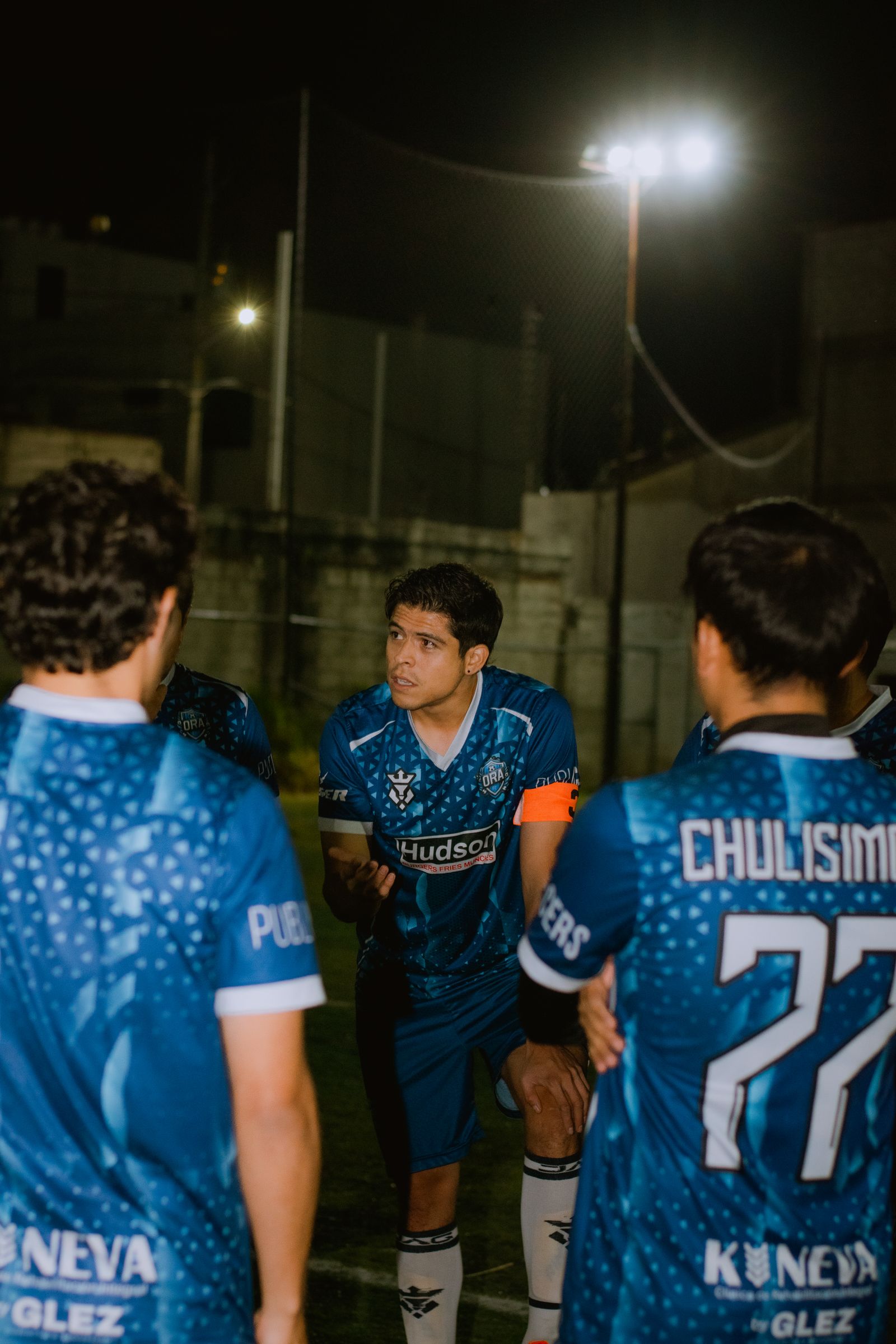
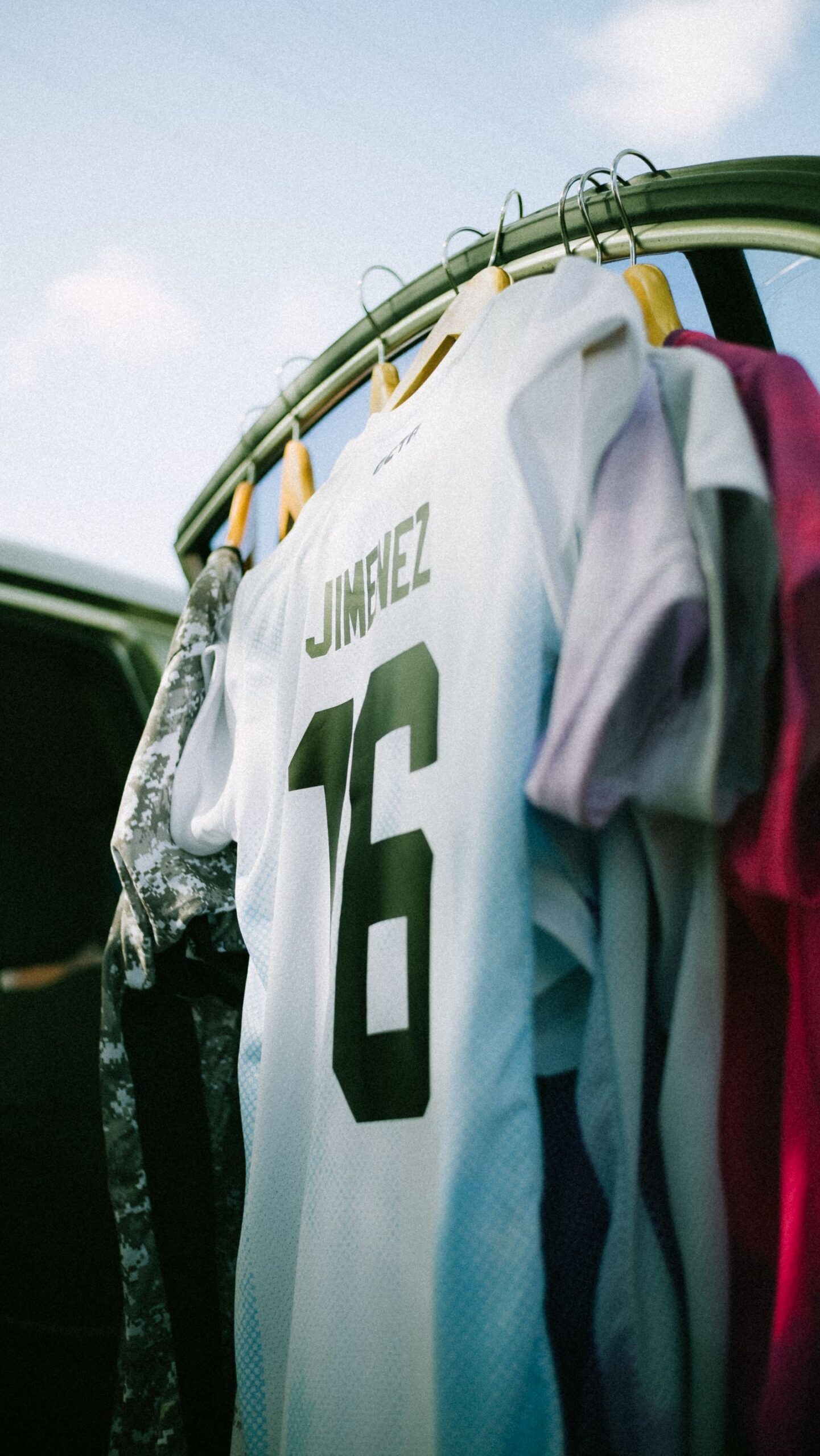
Team jerseys and uniforms
Names, numbers, sponsor logos and full-body graphics print as part of the fabric. Players get lightweight, breathable kits with colours that survive hard training and repeated washing without peeling.
All-over print fashion
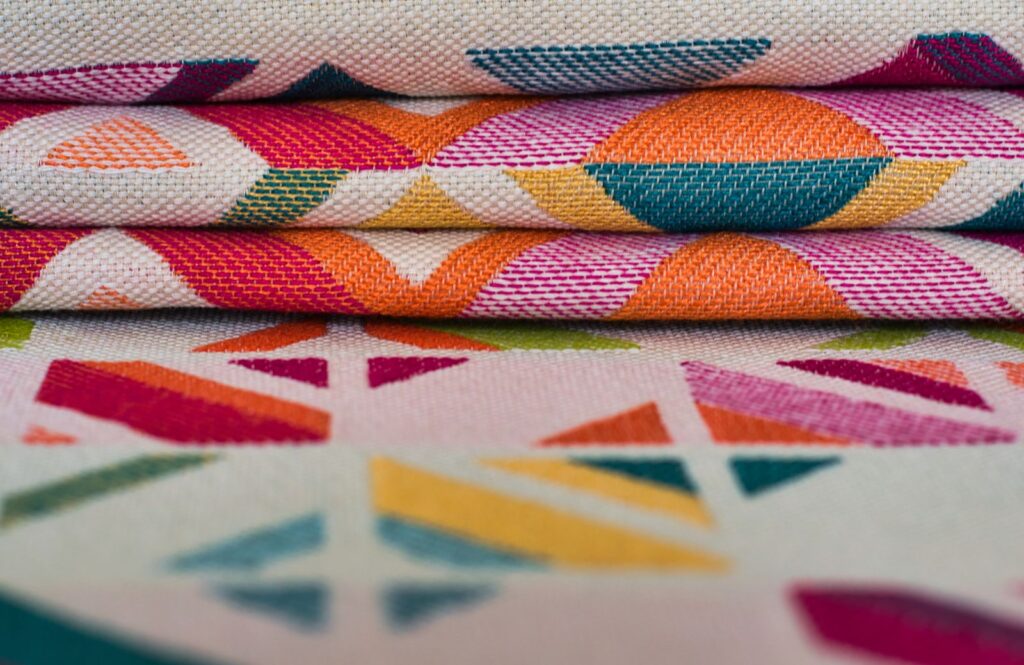
Patterns, camouflage, tie-dye effects and large illustrations spread across the entire garment, including seams. Streetwear and activewear labels use this to create looks that decorating a finished shirt cannot achieve.
Performance and activewear
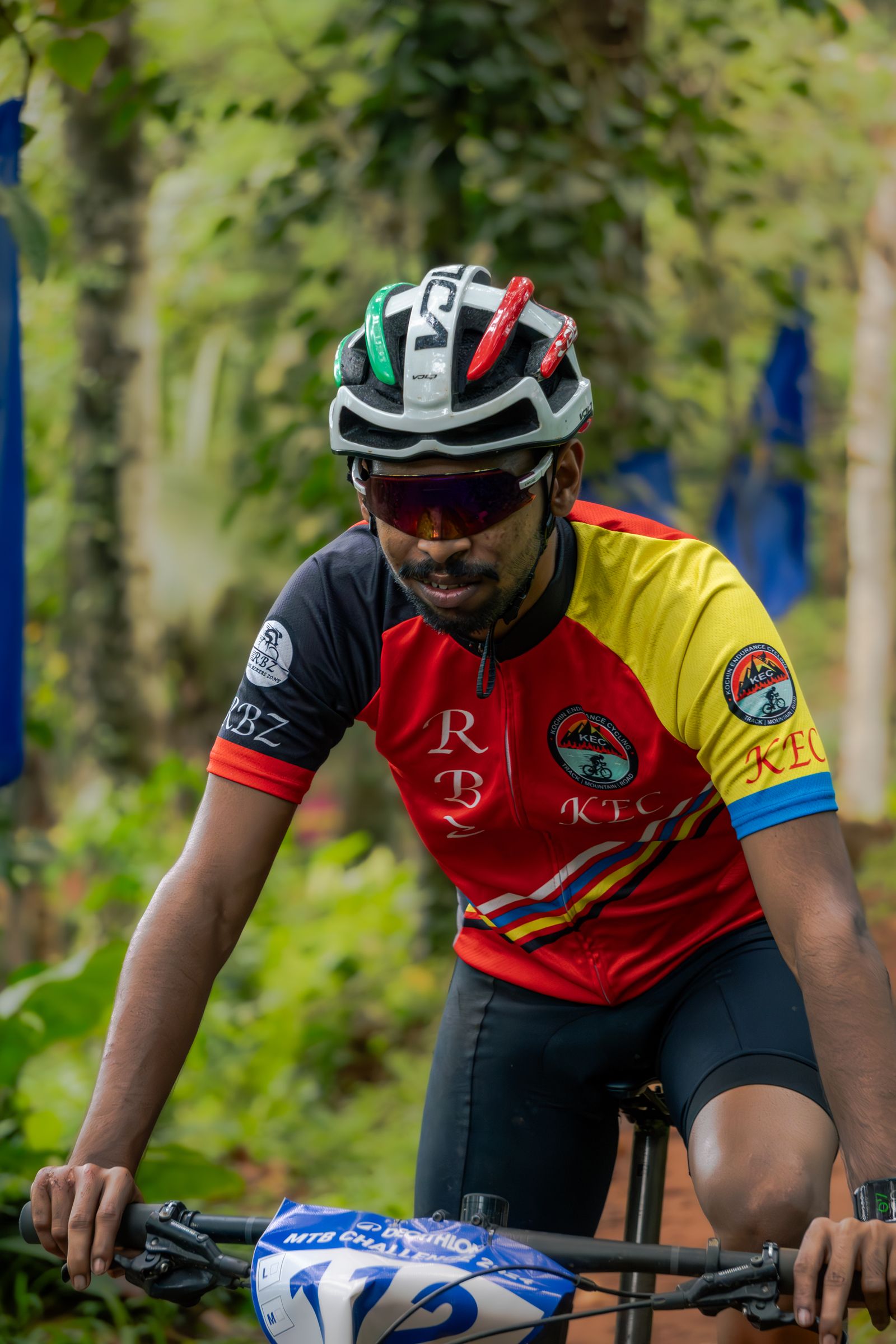
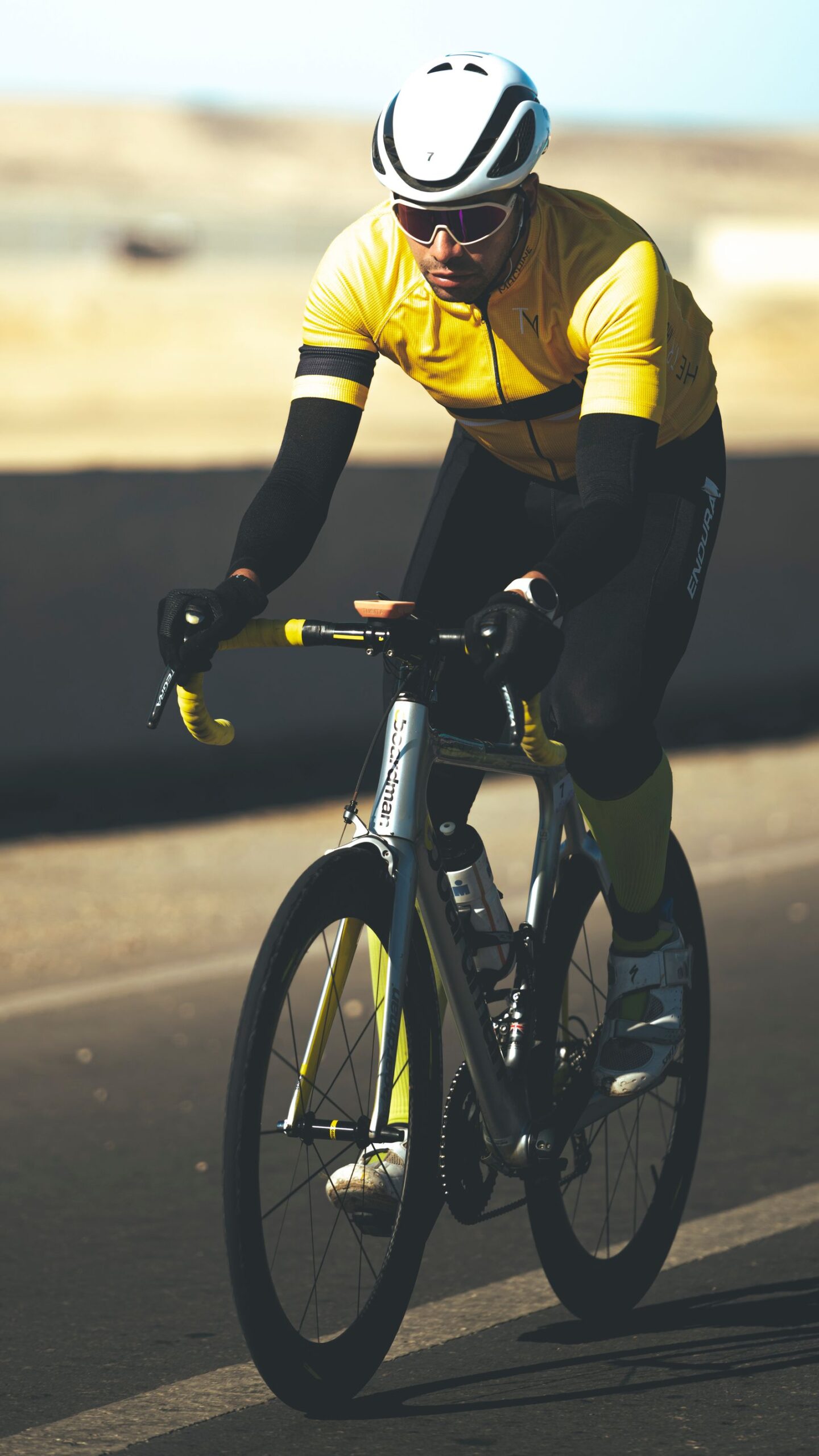
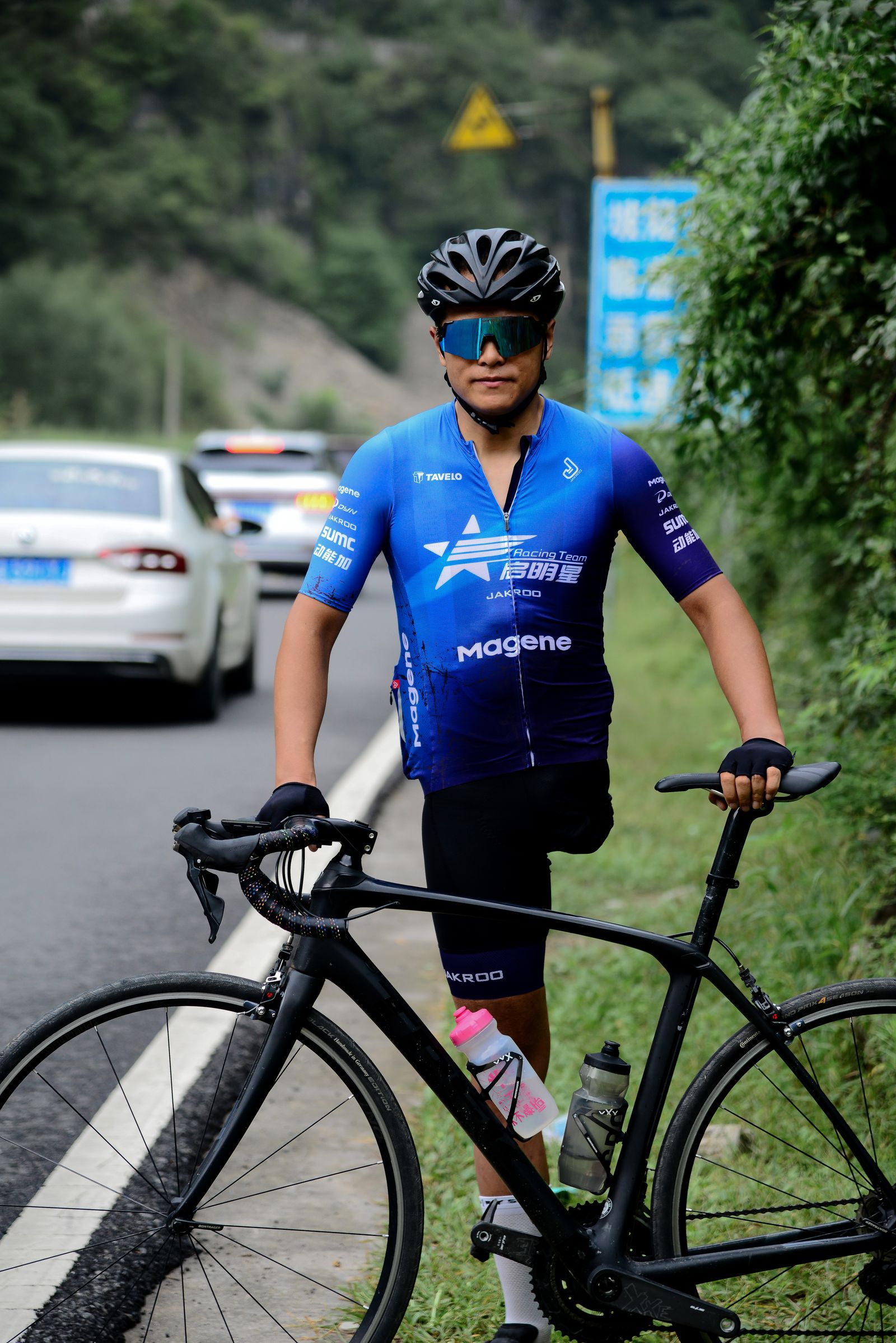
Moisture-wicking polyester keeps its stretch and breathability because there is no ink layer to block the fibres. Leggings, cycling kits and running tops all benefit from a print you cannot feel.
Photographic and gradient artwork
Smooth colour transitions and fine detail reproduce well because the dye infuses evenly. Complex artwork costs the same as simple artwork, so colour count never affects the price.
Strengths of our sublimation line
Exact heat and dwell control
Temperature and press time determine colour depth. We hold both within tight limits and calibrate with test strips so colours stay consistent across panels and batches.
Cut-and-sew all-over prints
Large-format printing on roll paper lets us place artwork across panels before sewing, so patterns line up at seams and there are no white edges when the garment is worn.
Colour managed profiles
Sublimation inks shift in colour when heated. Our profiles compensate for the shift, so the finished garment matches the approved proof rather than the washed-out transfer paper.
Breathable finish
Dye sits inside the fibre with no film on top, so moisture-wicking and stretch properties of the polyester stay intact in sportswear and base layers.
Sublimation options
Tell us your garment type, design and quantity. We will confirm fabric suitability, quote the job and prepare a layout proof for your approval.
Fabric choices
We use white polyester jersey, interlock, mesh and brushed fabrics. Polyester content should be 100 percent for full vibrancy, and 65 percent is a practical minimum for acceptable colour.
Full-garment vs placement prints
Print a full all-over design, a large panel, or a single logo with the rest of the garment plain. Placement prints suit fashion drops, while all-over suits team kit.
Names, numbers and sponsors
Variable data such as player names, numbers and sponsor logos can be printed per piece within the same order. Provide a roster spreadsheet and we place each name against its size.
Colour and finishing notes
Base fabric colour changes the final shade, and dark colours are not possible on dark garments. We advise on pale base options and proof the artwork on your chosen fabric before production.
Sublimation or another method
Choose sublimation when the garment is white or light polyester and you want a coverage, durability and breathability that surface prints cannot match. It also excels when artwork needs to run across seams or cover the whole garment.
Choose DTF for dark polyester, cotton, or blended fabrics, where sublimation will not show or bond. Choose screen printing for bold, opaque graphics on cotton. We will check fibre content before quoting, because sublimation on the wrong fabric is the most common cause of disappointing results.
Who orders this
Sublimation attracts buyers who need coverage, comfort and a print that does not wear off. It is a natural fit for sport and any garment where texture and weight matter.
- Football, basketball and rugby clubs ordering match kits
- Cycling and running groups wanting custom activewear
- Fashion brands launching all-over pattern collections
- Event teams and crews needing lightweight uniforms
- Schools ordering house and PE kit with names and numbers
Care & durability
Sublimated garments are very low maintenance. Wash cool to warm, inside out, and avoid chlorine bleach. The print will not crack or peel, since it is in the fibre.
Avoid ironing directly on prints and high tumble heat, which can stress the polyester. Keep sublimated garments away from fabric softener, which can reduce moisture-wicking. Over time, polyester may pill, but the colour stays.
Sublimation questions answered
Straight answers to the questions buyers ask us most. Anything missing? Send an inquiry and we will reply within one business day.
Can you sublimate on cotton?
Not effectively. Sublimation dye bonds with polyester, so cotton gives faded colour that washes away. For cotton, we recommend screen print, DTG or DTF. For all-over prints, we use polyester fabrics designed for the process.
Why can't sublimation print white?
The inks are transparent dyes with no white pigment, so the colour of the fabric shows through. White areas in your design stay as the fabric colour. That is why white or light polyester is the standard base for sublimation.
Do all-over prints have seam lines?
With cut-and-sew production, we print the fabric first and sew afterwards, so patterns can run across seams. Minor pattern differences at seams are normal, but we align panels to minimise them and show you a mockup first.
How do you handle names and numbers?
Send a spreadsheet with names, numbers and sizes. We print each variable element in the same run, so every garment arrives personalised. Check spelling carefully, because sublimation cannot be removed once applied.
What is the minimum order?
Most sublimated garments start at 50 pieces for cut-and-sew all-over production. Smaller runs of single-panel or placement prints are possible. Tell us what you need and we will confirm the minimum for your style.
Request a quote for Sublimation Printing
Tell us your garment type, design and quantity. We will confirm fabric suitability, quote the job and prepare a layout proof for your approval.
- Reply within one business day
- Free mockup with every quote
- Pre-production sample before bulk
- Low minimums from 50 pieces
Prefer to talk? WhatsApp or call +92 329 8034691
When you click send, WhatsApp opens with your details pre-filled so you can send them straight to our team.
Print your kit, edge to edge
Send your artwork and roster details. We will check fabric requirements, build an all-over mockup and quote your order with a sample before full production.